How We Build
How we build a roof system
None of these are upgrades. None are add-ons. This is the baseline on every roof we build. The things we do aren't for the day of install. They're for year 10 and year 20. Any quote that leaves one out is quoting a different roof. Each standard below has its reason, and the source where there is one.
The standards
Hand-nailed, no guns
A nail gun doesn't feel the deck. Over-driven nails crack the mat; under-driven nails sit proud and lift in the wind.
[BRIAN: #24 confirm the absolute wording / VERIFY the code number before this line ships]Screws with rubber (EPDM) washers on every flashing
Nails back out as the house moves. The screw threads grip and the washer seals. No caulk. No band-aid.
[BRIAN: #20 confirm the absolute wording / VERIFY the code number before this line ships]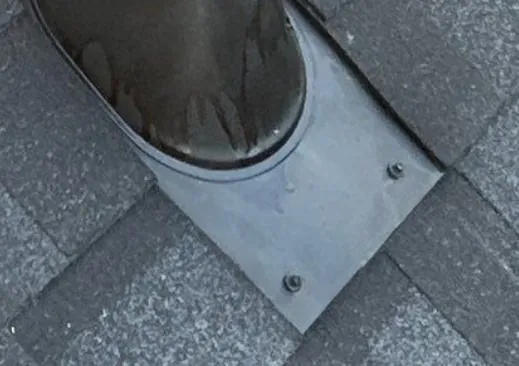
Flashing flange held down with screws and rubber washers. No caulk. [PHOTO: swap — stand-in photo; swap for a Breakwater job when one exists] 2x4 drip edge
Code wants drip edge over the deck edge; smaller profiles come up short once the fascia is on.
[BRIAN: #60 confirm the absolute wording / VERIFY the code number before this line ships]Gutters detached and reset when they're fastened through the drip edge
On most homes here they are. The new drip edge has to go on correctly, and water shouldn't run behind it into the fascia.
[BRIAN: #19 confirm the absolute wording / VERIFY the code number before this line ships]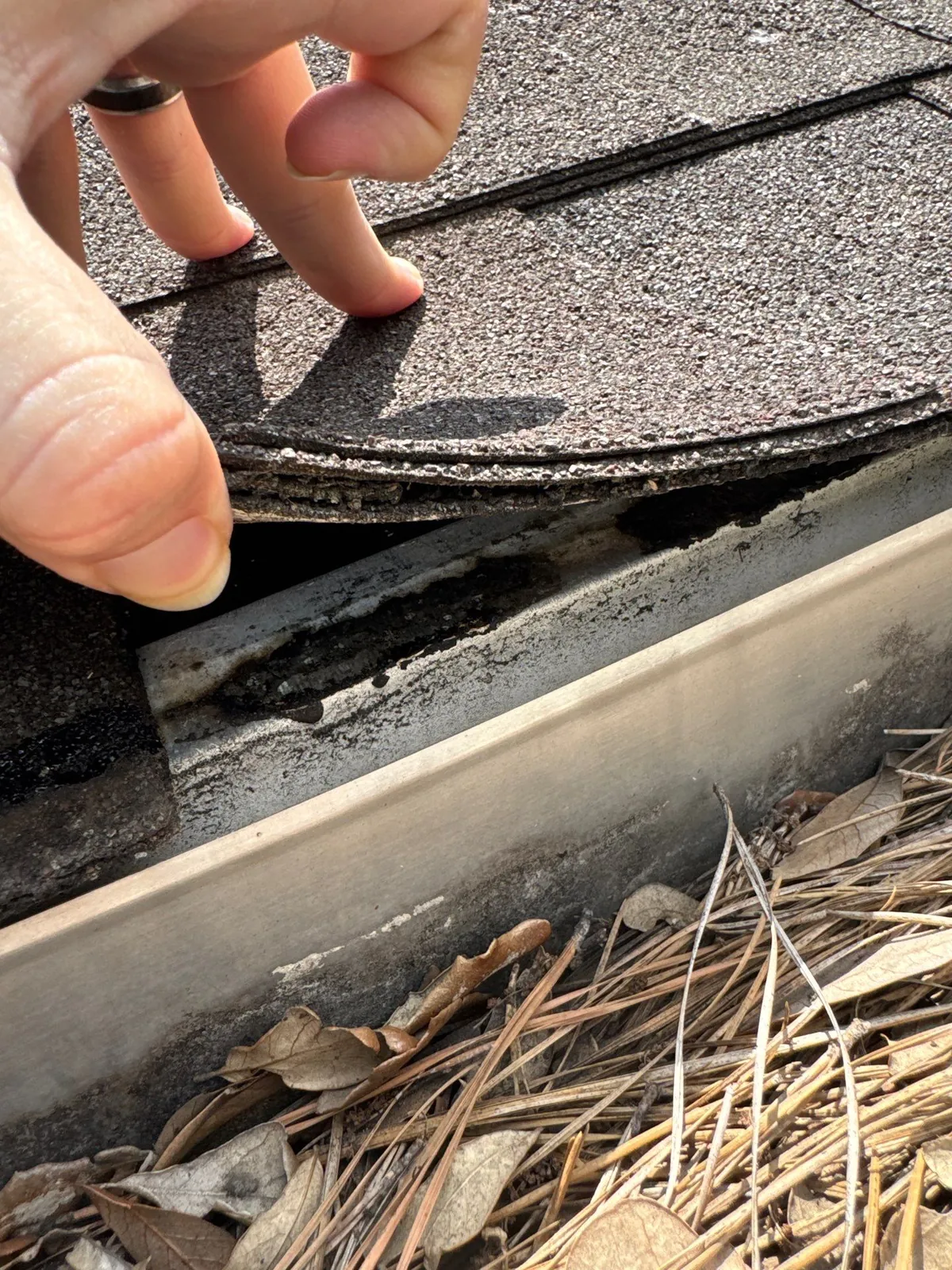
Shingle edge lifted at the gutter. The gutter is packed tight against the roof edge. [PHOTO: swap — stand-in photo; swap for a Breakwater job when one exists] Ventilation calculated for your attic
Balanced intake and exhaust, sized by the attic, with exhaust at the high points.
[BRIAN: #62 confirm the absolute wording / VERIFY the code number before this line ships]A metal dryer jack on every dryer vent
Most caps on roofs here say "Not for dryer vent use."
Bathroom fans vented on their own
Fans tied into one cap send moist air where it shouldn't go.
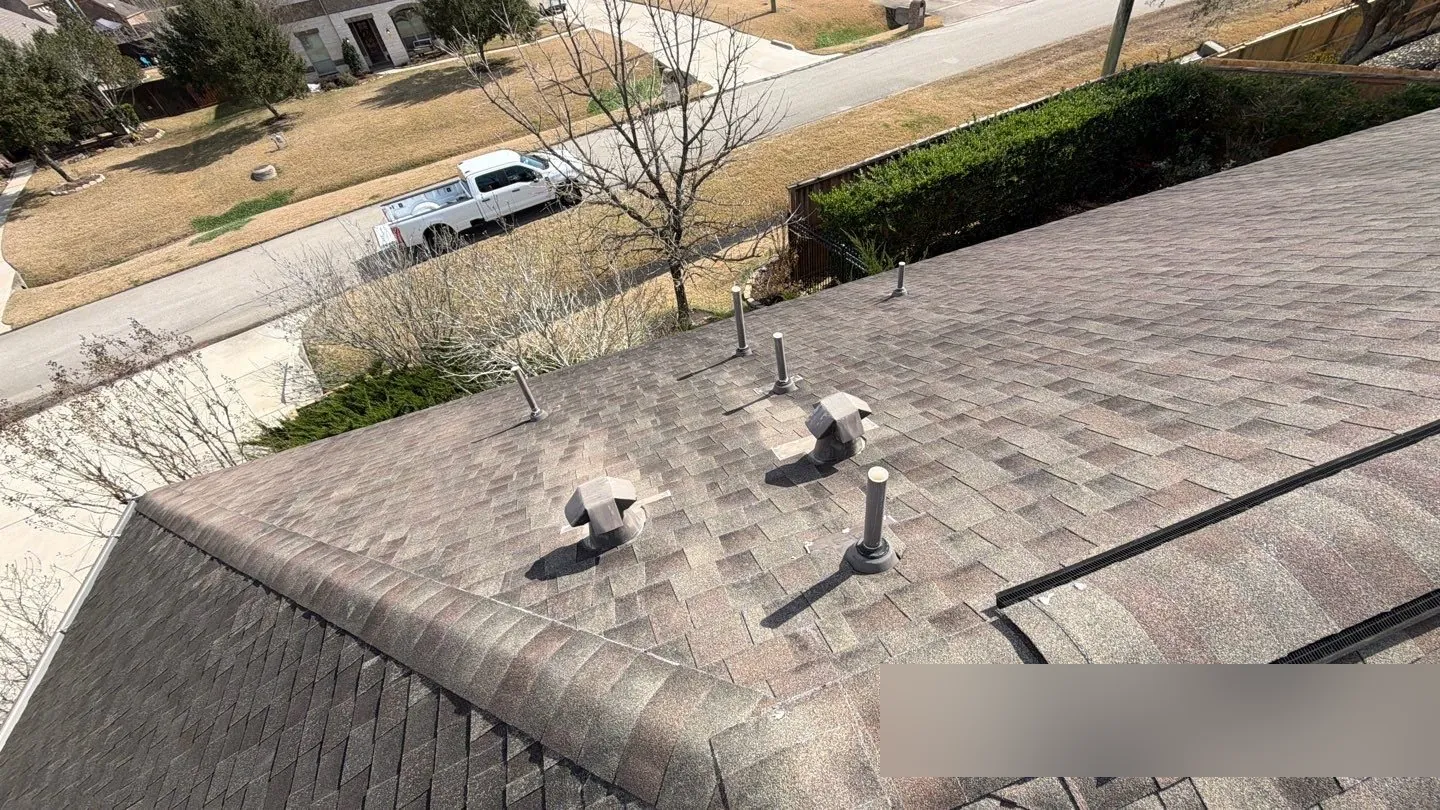
Two 4-way exhaust caps on a shingle roof. [PHOTO: swap — stand-in photo; swap for a Breakwater job when one exists] 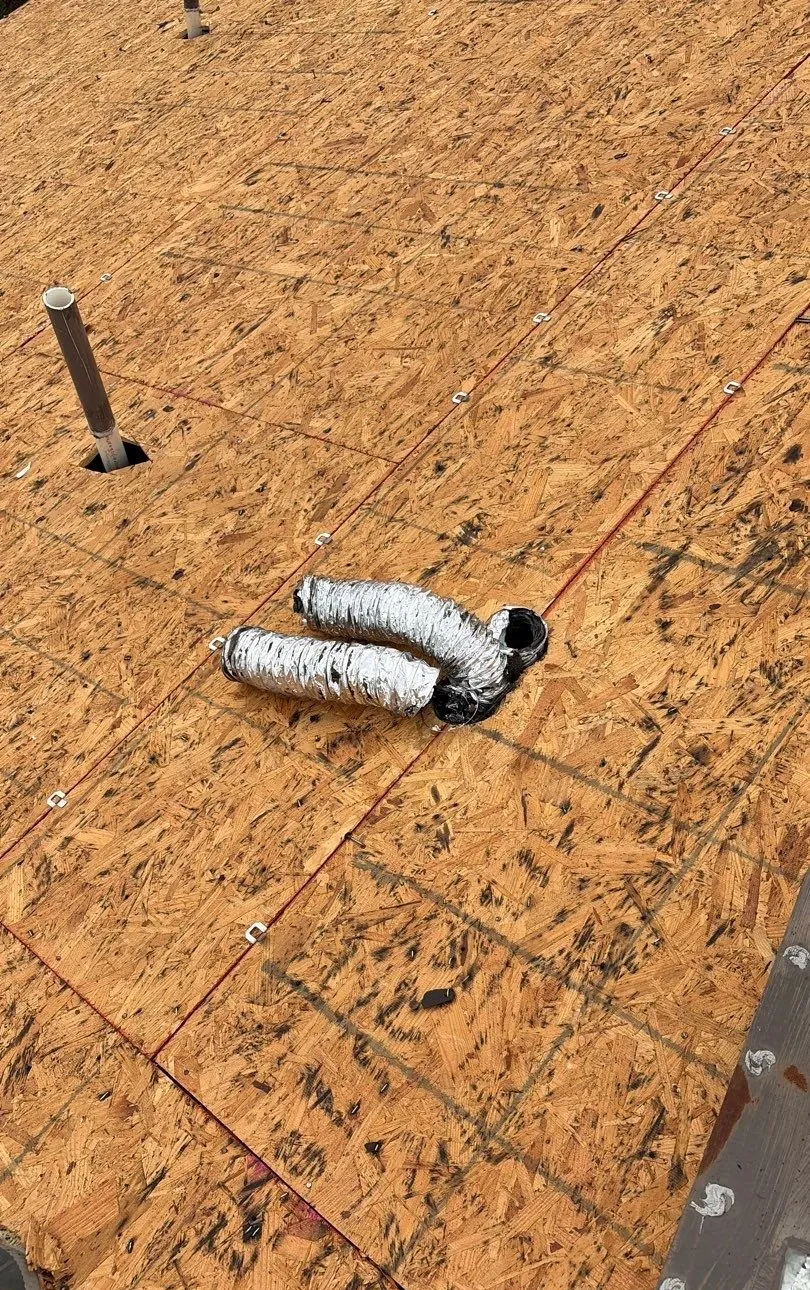
Under a 4-way cap after tear-off: two fan ducts sharing one hole. [PHOTO: swap — stand-in photo; swap for a Breakwater job when one exists] 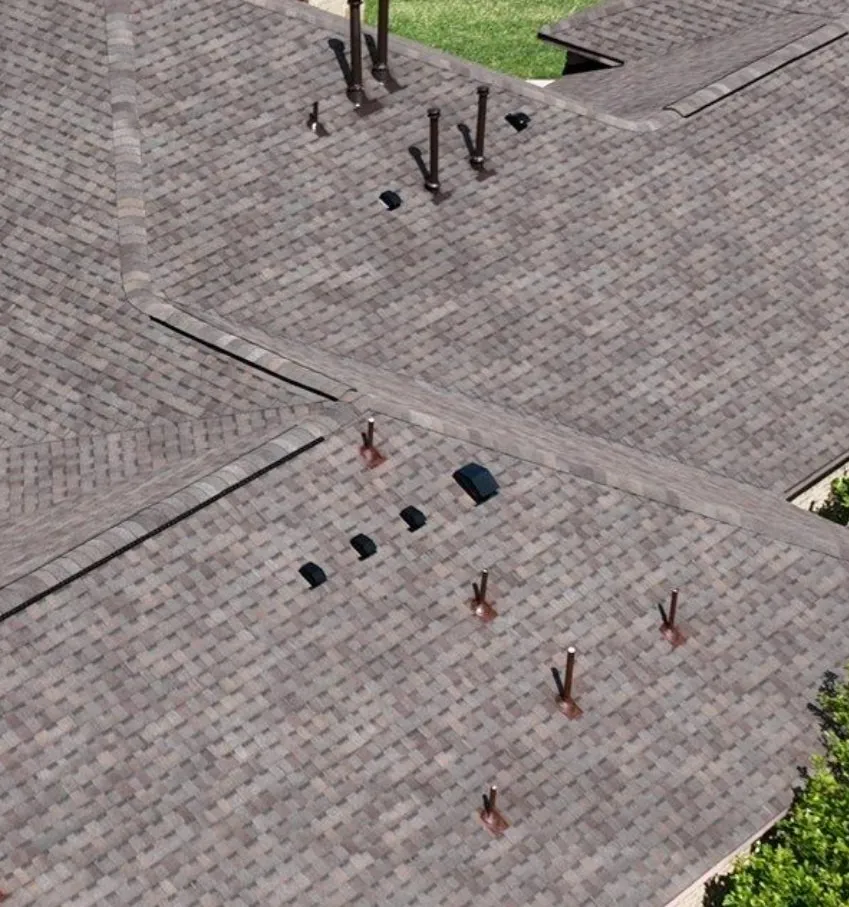
Separate vent, separate path, separate cap. [PHOTO: swap — stand-in photo; swap for a Breakwater job when one exists] Full tear-off, never a layover
Layovers are a cheaper job and a worse roof.
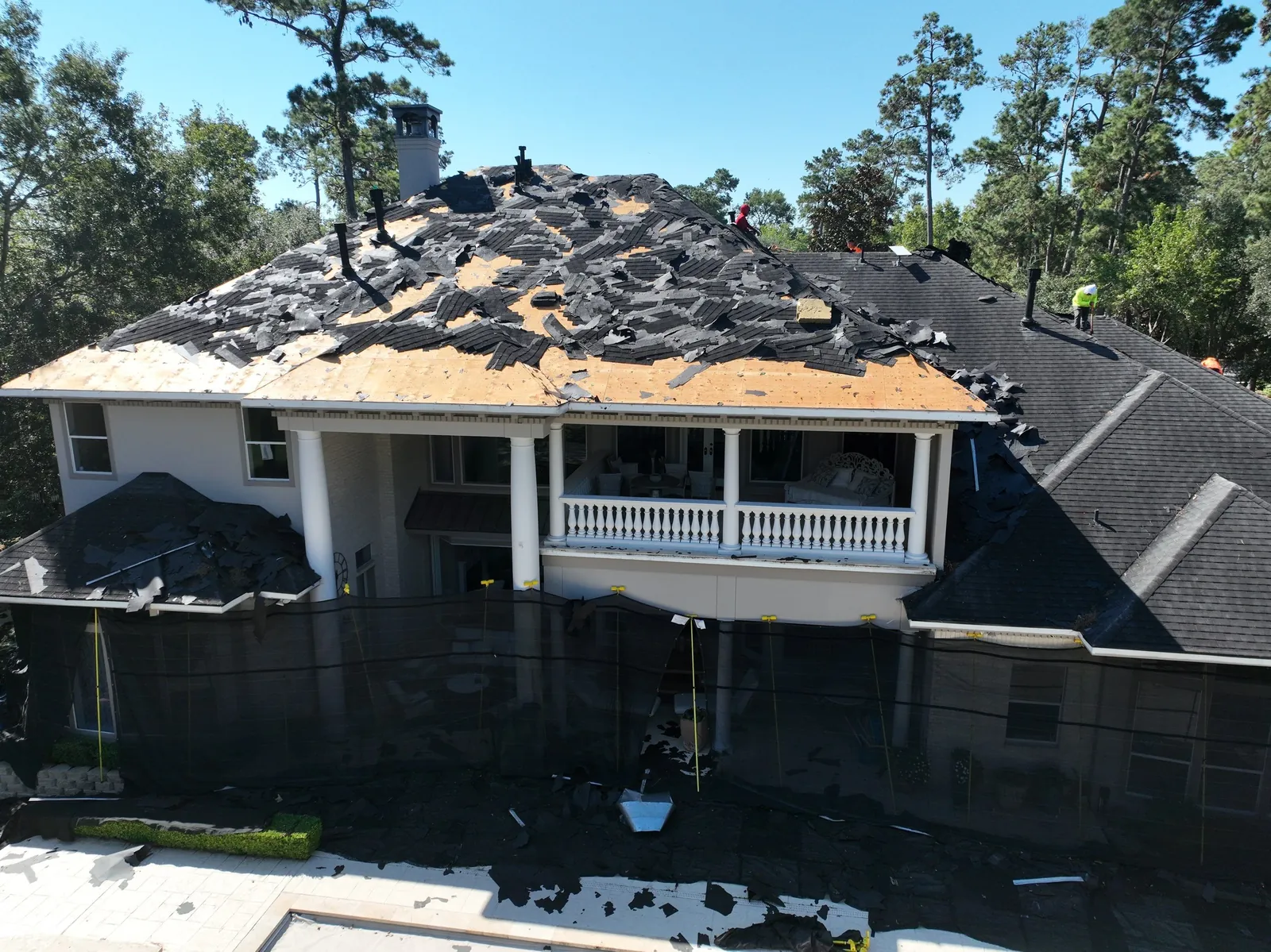
Tear-off down to the deck, with netting up on the walls. [PHOTO: swap — stand-in photo; swap for a Breakwater job when one exists] Decking inspected after tear-off
Compromised decking is fixed and itemized, with photos.
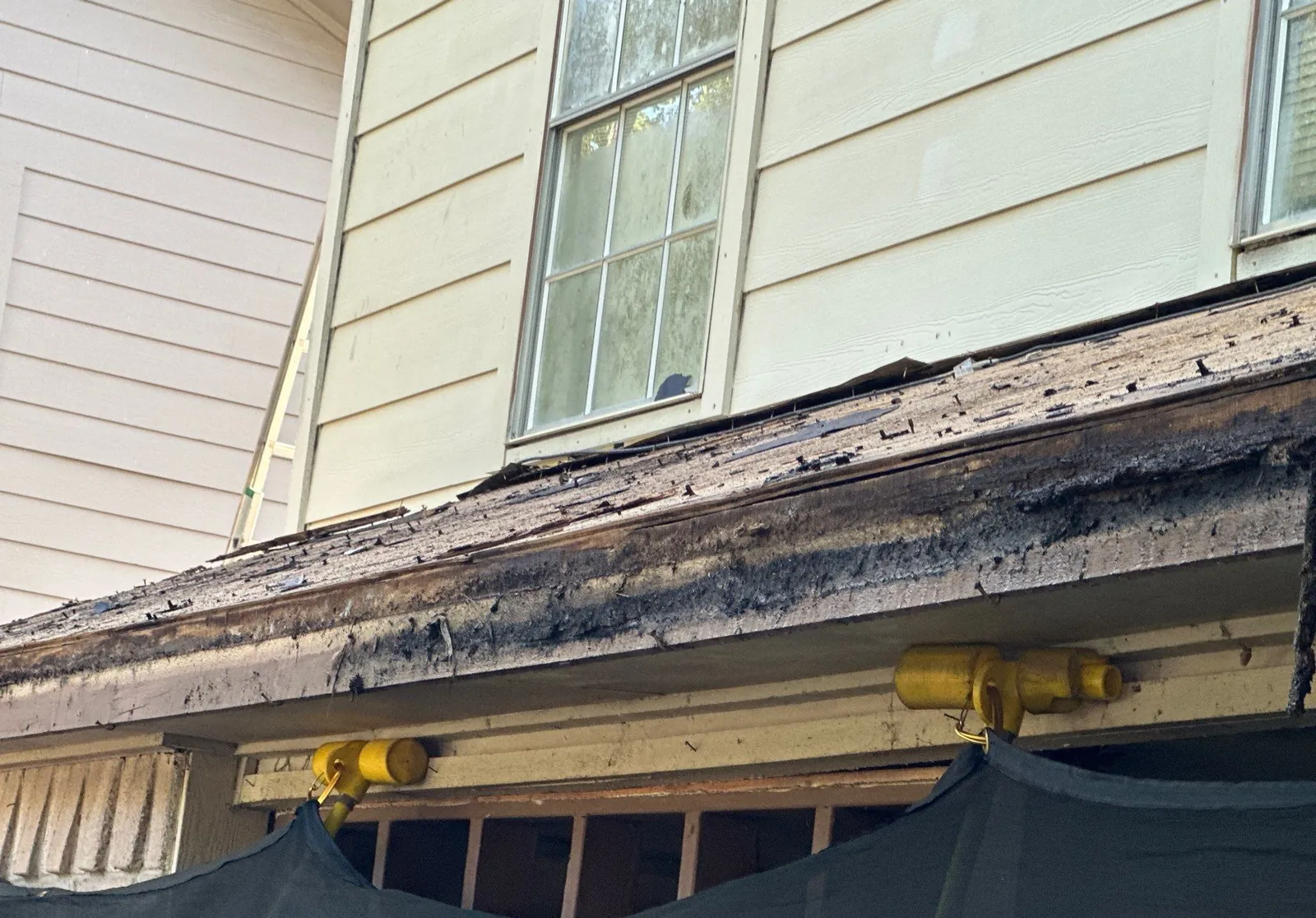
Rotted deck at the eave, found at tear-off. It gets fixed and itemized, with photos. [PHOTO: swap — stand-in photo; swap for a Breakwater job when one exists] Every pipe jack and penetration flashing new
A known 10 to 12 year failure point doesn't go back on a new roof.
Dormer flat metal caps new, not painted over
Breakwater Property Protection
Perimeter nets and breathable ground tarps set the day before tear-off; several magnet sweeps after.
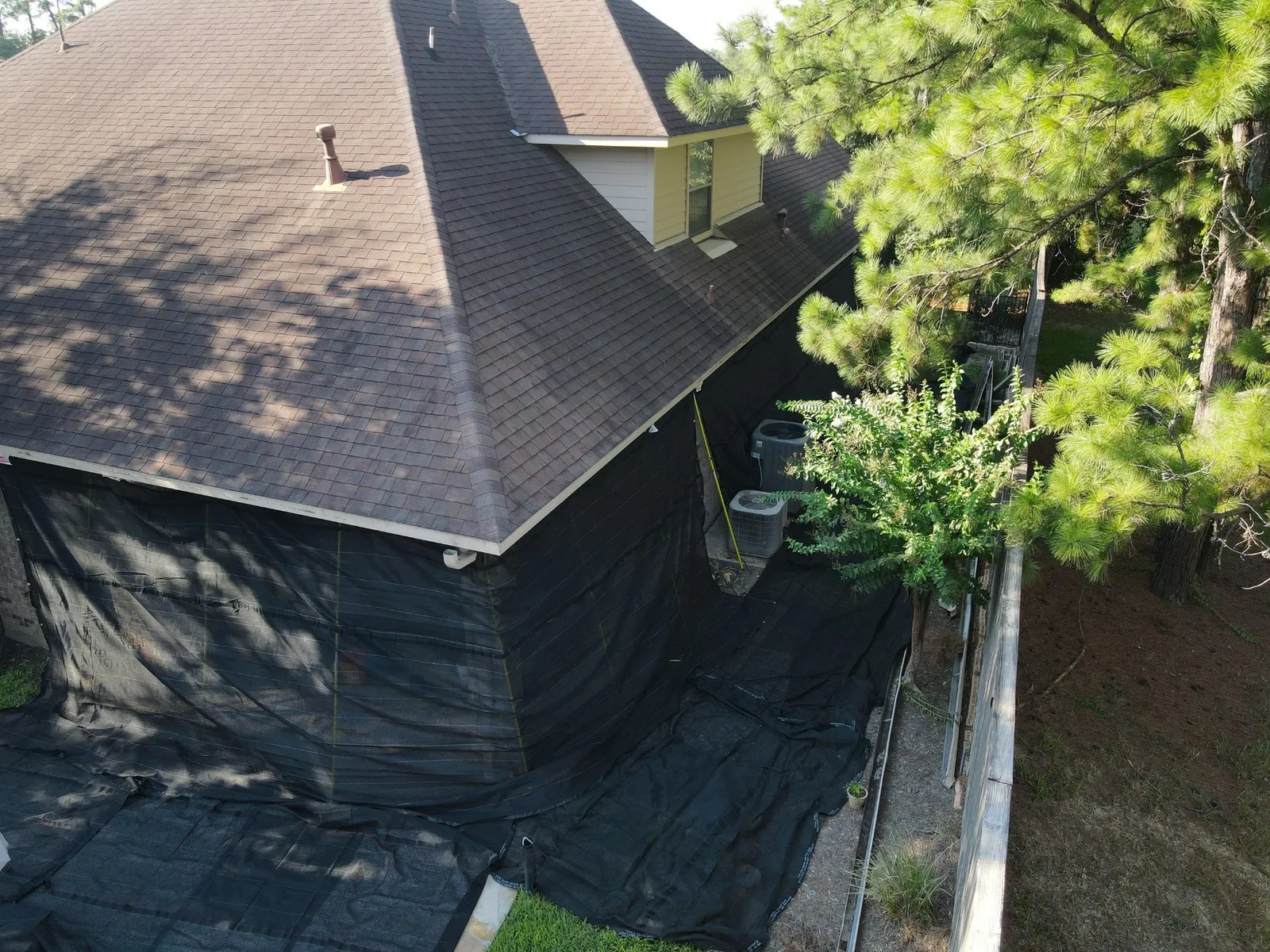
The AC units sit inside the netting. [PHOTO: swap — stand-in photo; swap for a Breakwater job when one exists] Magnetic nail sweep of the whole property, photographed
Your yard does not pay for your new roof.
A photo record: before, during, after
Time-stamped. The record is yours for good.

The roof from the air, before any work. The record starts here. [PHOTO: swap — stand-in photo; swap for a Breakwater job when one exists] Manufacturer warranty filed in your name
Most homeowners assume it's automatic. It isn't. An unfiled warranty is an uncovered roof.
We used to build the other way
Over the years we learned. We used to use 2x2 drip edge. Then we learned it doesn't cover the decking once the fascia is on. So we changed. Every time we found a more correct way, we changed the standard. Not for some jobs. For every job.
Questions homeowners ask
Does a nail gun void a shingle warranty?
A gun by itself doesn't. What the manufacturer requires is every nail in the right place, at the right depth, straight. Guns fire at inconsistent depths: over-driven nails cut the mat, under-driven ones sit proud. We hand-nail because a hand feels the deck.
Hand nailed vs nail gun shingles: which is better?
Both can meet the instructions. Hand-nailing gives control over every nail: placement, depth and angle. It costs little extra, and we do it on every roof because we know where every nail lands.
Do you use screws to hold the shingles?
No. Shingles are nailed. Screws with rubber (EPDM) washers go in the flashings, the metal pieces where the roof meets walls, pipes and vents.
Why does drip edge size matter?
Drip edge has to cover the edge of the deck once the fascia is on. Undersized profiles leave the deck edge short. We use drip edge sized to give the deck its full coverage.
See what your roof is telling you before you decide anything.
- Book a roof inspection.
- We bring your roof system down to you. The good, the bad, what's failing, in photos.
- You decide.